Ride Tracking

FleetPaths banner: tablet showing fleet analytics with charts in the foreground, row of white delivery vans in the blurred background, and the headline 'Closing The Visibility Gap' above.

Closing The Visibility Gap: What to Expect from Fleet Tracking in 2026

Fleet tracking has reached a point where simply knowing vehicle location is no longer enough. Most systems today can display real time movement, but that alone does not provide meaningful operational insight. In 2026, fleet managers are expected to deliver clarity, accountability, and efficiency across increasingly complex operations. This shift requires asking more from tracking systems and, more importantly, asking better questions of them. The focus is no longer on data collection but on what that data actually reveals. Managers need tools that explain what is happening in the field, not just where it is happening. When tracking software can connect activity to outcomes, it becomes a core operational asset rather than a passive monitoring tool. Moving Beyond Location and Into Outcomes The first question fleet managers should ask is whether their system goes beyond simple location tracking. Knowing where a vehicle is can be useful, but it does not confirm whether work has been completed or performed correctly. Without that context, even accurate data can lead to incomplete conclusions. Strong systems should be able to answer: These insights shift tracking from observation to understanding, which is where real value begins. Verifying Work with Confidence One of the most common challenges in fleet management is confirming that work has been completed as expected. Many organizations still rely on manual reporting, end of shift summaries, or verbal updates to fill in the gaps. This approach leaves room for inconsistency and delays in decision making. Tracking software should provide clear, time based records that allow managers to verify service without hesitation. When systems can answer questions about where and when work occurred, teams gain confidence in their data and can respond more effectively to internal and external inquiries. Understanding Efficiency at the Work Level Efficiency should not be measured solely by mileage or fuel consumption. While those metrics are important, they do not reflect how effectively work itself is being performed. Fleet managers should expect their systems to reveal how resources are being used during actual service delivery. Key questions to explore include: By focusing on how work unfolds in the field, organizations can identify opportunities to improve without simply increasing resources. Closing the Gap Between Field and Office A persistent challenge in fleet operations is the disconnect between field activity and office visibility. When managers rely on delayed updates or fragmented reporting, decision making becomes reactive instead of proactive. Tracking systems should eliminate this gap by creating a shared, real time view of operations. When everyone from supervisors to leadership works from the same data, communication improves and confusion decreases. This alignment allows issues to be addressed as they happen and ensures that decisions are based on current information rather than assumptions. Planning for What Comes Next Beyond daily operations, tracking software should play a key role in planning. Historical data is only useful if it reflects actual work and not just movement. Fleet managers should expect their systems to help them plan more accurately and adapt to changing conditions. Modern platforms like FleetPaths are designed with this broader perspective in mind, combining visibility, route completion data, and reporting into a single system. By asking better questions and expecting clearer answers, fleet managers can move beyond basic tracking and build operations that are more predictable, efficient, and accountable.

Closing The Visibility Gap: What to Expect from Fleet Tracking in 2026 Read More »

FleetPaths logo with the headline 'The Power Of Proof' and subhead 'How Fleet Data Reduces Liability Risk' over a light gradient with orange map pins on a winding road (hero image).

The Power of Proof: How Fleet Data Reduces Liability Risk

The Growing Challenge of False Claims Public agencies today face increasing pressure to respond quickly and accurately to complaints, liability claims, and service disputes. Whether it’s a missed garbage pickup, an unplowed road, or a delayed transit vehicle, these claims can be difficult to verify without reliable data. Historically, agencies relied on handwritten logs, driver recollection, or incomplete records to piece together what happened. In many cases, that lack of visibility left room for uncertainty and unnecessary payouts. From Uncertainty to Verifiable Proof GPS tracking and digital fleet systems have changed how agencies approach accountability. By capturing real‑time vehicle locations, timestamps, and route history, these tools create a verifiable record of where assets were and what work was completed. Instead of debating conflicting accounts, agencies can reference objective data to confirm or refute claims. Solutions like FleetPaths help consolidate this information into clear, accessible reports that can be quickly shared when questions arise. What Data Matters Most in Disputes Not all data is equally valuable when defending against a claim. The most effective agencies focus on capturing information that directly connects work performed to a specific location and time. This creates a defensible “digital paper trail” that can stand up to scrutiny from residents, insurers, or legal teams. Key data points often used include: Real‑World Applications Across Departments GPS‑based proof of service applies across a wide range of public operations, not just one department. Sanitation teams use it to confirm pickups were completed on schedule, while street maintenance crews can verify when and where work was performed. Transit agencies can validate delays, route adherence, or whether a vehicle passed a specific stop as scheduled. By standardizing how this data is captured and stored, agencies create consistency in how disputes are handled. Faster Resolutions, Lower Risk When a claim is supported or disproven with clear data, resolution times drop significantly. Staff no longer need to spend hours investigating or coordinating across departments to reconstruct events. This not only reduces administrative burden but can also lower financial risk by preventing unwarranted settlements. Platforms like FleetPaths streamline this process by making historical data easy to search, visualize, and export when needed. Agencies often report benefits such as: Building Trust Through Transparency Beyond defending against claims, GPS data plays an important role in building public trust. When agencies can clearly demonstrate what work was completed and when, transparency improves across the board. Residents gain confidence that services are being delivered as promised, and internal teams operate with greater accountability. In an environment where expectations continue to rise, having reliable, shareable proof of service is no longer optional, it’s essential.

The Power of Proof: How Fleet Data Reduces Liability Risk Read More »

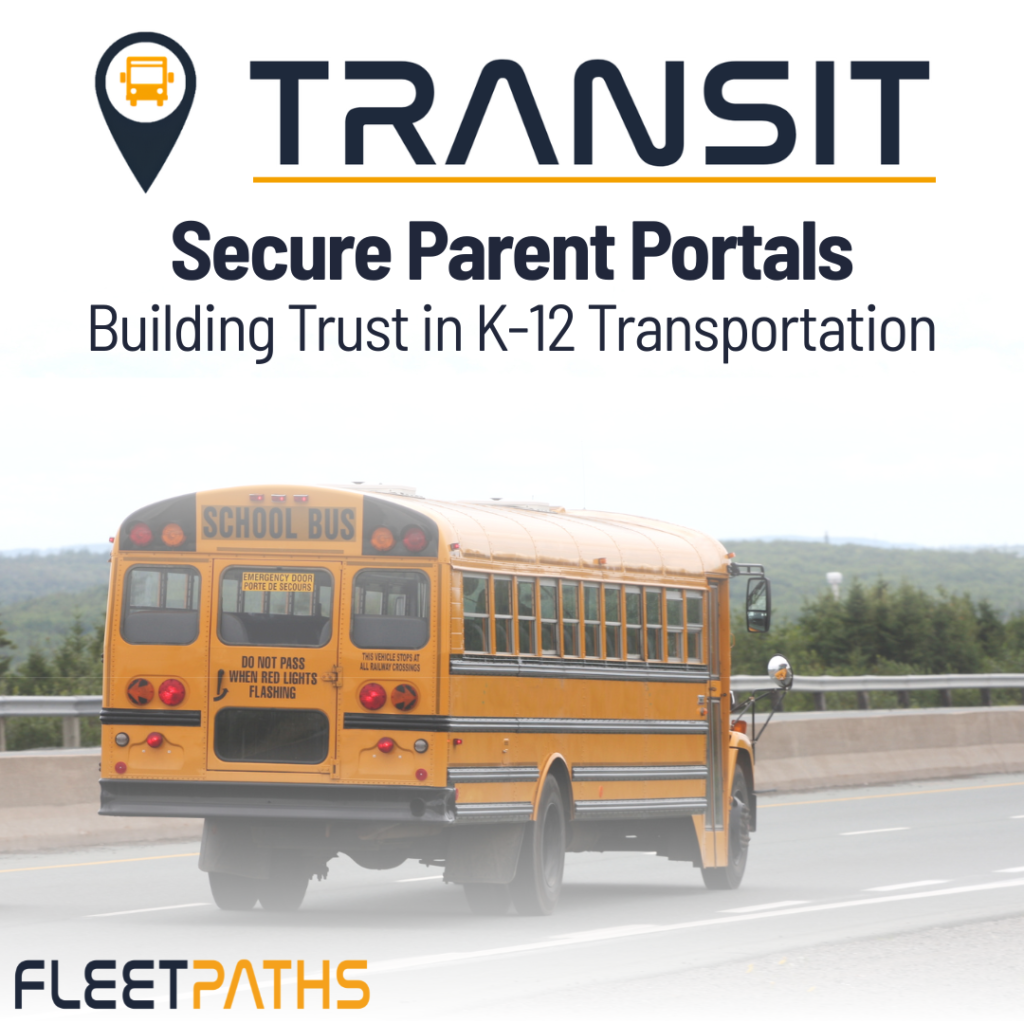
Secure Parent Portals: Building Trust in K-12 Transportation

The Importance of Privacy in School Transportation As school transportation systems become more connected and data driven, protecting student information has never been more critical. Real time bus tracking and route visibility offer clear benefits for families, but they also introduce new responsibilities around data security. Parents and school districts alike expect location data to be shared only with the right people, at the right time, and for the right reasons. Secure parent portals are designed to balance transparency with safety by putting privacy first. Why Student Location Data Requires Extra Protection Student transportation data is uniquely sensitive because it involves minors and predictable daily patterns. If mishandled, this information could expose students to unnecessary risk or violate privacy regulations. Unlike public transit systems, K-12 transportation requires tighter controls to ensure only authorized guardians can view information related to their child. Private parent portals help address this challenge by restricting access to verified users instead of making data publicly searchable. Key Security Features of Private Parent Portals Well designed parent portals rely on layered security measures that limit who can see what and when. These platforms are built so parents only see information tied to their own student, rather than full fleet wide views. Common security focused features include• Secure login credentials tied to parent or guardian accounts• Student specific visibility controls rather than route wide access• Encrypted data transmission between devices and servers Together, these safeguards help schools maintain transparency without compromising safety or trust. Building Trust Through Controlled Access When parents know that student location data is protected, confidence in school transportation systems grows. Secure portals allow districts to share real time updates while still maintaining strict boundaries around access. This approach reduces anxiety for families without exposing sensitive operational details. Over time, consistent and secure communication strengthens trust between schools and the communities they serve. Compliance and Responsible Data Management Beyond safety concerns, many districts must comply with local, state, and federal data privacy requirements. Private parent portals support responsible data management by limiting data retention and ensuring access is logged and auditable. Technology alone is not the solution, but it plays a major role in helping districts meet their obligations. Platforms such as FleetPaths Private Parent Portals are designed with these considerations in mind, offering tools that support both compliance and peace of mind. A Smarter Balance Between Visibility and Privacy The future of school transportation depends on finding the right balance between information access and student protection. Secure parent portals show that real time visibility does not have to come at the expense of privacy. By using private, authenticated systems instead of public links, districts can deliver meaningful updates while keeping student data safe. For schools exploring modern transportation tools, privacy first design should always be a core requirement, not an afterthought.

Secure Parent Portals: Building Trust in K-12 Transportation Read More »

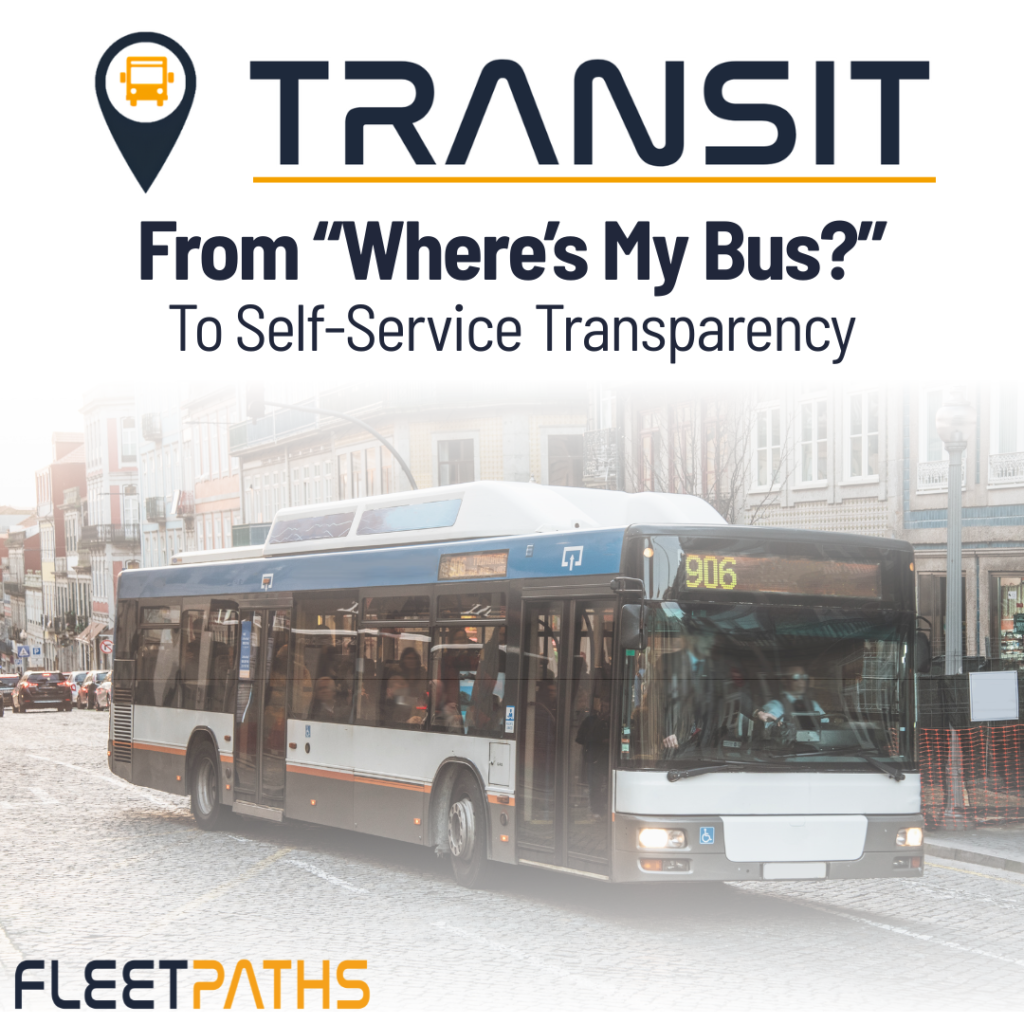
From “Where’s My Bus?” to Self‑Service Transparency

The Cost of Not Knowing For transit agencies, few questions are more common or more frustrating than “Where’s my bus?” When riders lack real‑time information, uncertainty quickly turns into anxiety, complaints, and lost confidence in the service. Behind the scenes, staff are pulled away from critical operations to answer phones and respond to emails that could have been avoided. Modern transit platforms like FleetPaths Transit are designed to close this gap by turning live fleet data into clear public updates. Why Riders Expect Self‑Service Information Today’s riders are conditioned by on‑demand digital experiences in nearly every part of daily life. They expect to check arrival times, delays, and service changes instantly from their phones without calling dispatch. When transit systems fail to meet these expectations, riders often perceive the service as unreliable even when vehicles are operating as planned. Self‑service tools, such as real‑time maps and ETAs delivered through Transit portals, help align rider expectations with reality. Turning Fleet Data Into Public Insight Modern fleet tracking systems already collect powerful operational data, but the real value emerges when that data is shared externally in a clear, rider‑friendly way. Public‑facing Transit portals transform GPS data into live maps, arrival predictions, and service visibility without adding extra work for operations staff. Instead of relying on static timetables, riders can see the system moving in real time. FleetPaths Transit makes this possible by directly linking internal fleet visibility to public insight. Common self‑service Transit tools include: Reducing Call Volume While Improving Trust Agencies that provide transparent, self‑service Transit information often see a meaningful drop in inbound calls. When riders can answer their own questions, dispatchers spend less time reacting and more time managing operations. Trust improves because information is consistent across teams and channels, what riders see is rooted in the same data staff rely on. Platforms like FleetPaths help ensure these connections stay accurate and reliable throughout the day. Supporting Operations, Not Replacing Them Self‑service transparency isn’t about replacing staff, it’s about supporting them. Dispatchers and supervisors can focus on safety, schedule recovery, and decision‑making instead of repeating routine updates. Field teams benefit from fewer interruptions and clearer expectations from riders. Transit tools that integrate seamlessly with fleet operations create calmer, more efficient workdays across the organization. Agencies commonly see improvements such as: A Smarter Path Forward for Transit Agencies Moving from “Where’s my bus?” to true self‑service transparency isn’t about flashy technology, it’s about delivering clarity and trust at scale. By giving riders access to real‑time Transit information, agencies reduce friction while strengthening public confidence. Solutions like FleetPaths Transit show how operational data can power better communication without added workload. As rider expectations continue to rise, transparent Transit visibility will increasingly define best‑in‑class service.

From “Where’s My Bus?” to Self‑Service Transparency Read More »

Why Route Completion Data Matters More Than Speed or Mileage

For years, fleet managers have relied on familiar metrics (speed, mileage, idle time, and fuel consumption) to evaluate performance. These data points are easy to capture and helpful for monitoring safety and operating costs, which is why they’ve become staples of fleet dashboards. But as fleet operations grow more complex and accountability expectations rise, many organizations are discovering that these metrics don’t tell the full story. The most important operational question is often much simpler: Was the work actually completed? That’s where route completion data becomes essential. Movement Tells You How a Vehicle Traveled, Not What It Delivered Speed and mileage are movement metrics. They describe vehicle behavior on the road, but they don’t verify service. A vehicle can operate safely, avoid excessive idling, and log reasonable mileage while still missing required streets, stops, or service areas. Route completion data connects movement to outcomes. It answers questions that traditional metrics can’t, such as: Without this context, performance evaluations are often based on assumptions rather than evidence. Route Completion Reframes Accountability When organizations track route completion, performance conversations change. Instead of reviewing abstract numbers, supervisors can evaluate tangible service results. This shift is particularly important for operations where coverage is the product: municipal services, sanitation, transit, snow operations, campuses, and contracted field services. In these environments, success isn’t defined by how far a vehicle drove but by whether assigned areas were serviced as expected. Completion data creates a shared source of truth. It allows teams to discuss performance objectively, identify operational constraints, and distinguish between execution issues and planning challenges. Proof of Service Is Becoming a Core Requirement In today’s operating environment, fleets face increased scrutiny from residents, customers, regulators, and internal stakeholders. When questions arise, speed and mileage rarely provide sufficient answers. Route completion data supports proof of service by creating verifiable records that show: This kind of documentation is invaluable for resolving complaints, responding to claims, supporting audits, and protecting both organizations and frontline employees. Increasingly, proof of service isn’t a “nice to have,” it’s expected. Completion Data Exposes Operational Blind Spots One of the most important advantages of route completion tracking is its ability to reveal issues that aggregated metrics often hide. Over time, completion data can uncover patterns such as: These insights allow managers to improve operations proactively rather than reacting to complaints. Routes can be adjusted, resources reallocated, and expectations reset using objective data instead of anecdotal reports. Verified History Leads to Smarter Planning Historical route completion data is also a powerful planning asset. It provides a realistic view of how long work actually takes under different conditions, helping leaders make informed decisions about staffing, scheduling, and equipment usage. When planning is grounded in verified completion data, organizations benefit from: Planning based on what actually happened is far more effective than planning based on what was assumed. Transparency Builds Trust, Internally and Externally For public-facing organizations, route completion data doesn’t just improve internal efficiency; it strengthens trust. When agencies and service providers can clearly demonstrate where and when work was completed, communication becomes easier and credibility improves. Completion data supports clearer internal reporting, more confident responses to public inquiries, and when paired with public-facing tools, greater transparency for residents and stakeholders. This transparency often reduces friction and lowers inquiry volume while reinforcing accountability. The Role of Modern Fleet Platforms Capturing meaningful route completion data requires more than basic GPS points. Modern fleet management platforms combine real-time tracking with defined routes, service zones, timestamps, and historical reporting to create a complete picture of delivered work. Platforms like FleetPaths are designed around this outcome-focused approach, helping organizations move beyond movement metrics and toward verifiable proof of service—without adding administrative overhead. Speed and mileage still matter. They play a critical role in safety initiatives, maintenance planning, and cost control. But they don’t answer the most important question fleets face every day. Route completion data does. Because fleets aren’t ultimately evaluated on how far they traveled or how efficiently they drove, they’re evaluated on whether the work was completed and whether they can prove it.

Why Route Completion Data Matters More Than Speed or Mileage Read More »

Building a Digital Paper Trail: Smarter Documentation for Modern Fleets

Public agencies operate under constant pressure to document work accurately, meet regulatory requirements, and maintain clear records for audits, inspections, and public inquiries. For many departments, field documentation has traditionally been handled through handwritten forms, verbal updates, and scattered spreadsheets. These methods create gaps in accountability and leave agencies vulnerable to errors, missing information, and compliance risks. Digital field documentation changes all of that. A digital paper trail creates clear, time stamped, and easily retrievable records that strengthen internal processes while improving community trust. FleetPaths supports this transformation by offering digital forms, real time job status tracking, route verification, transparent reporting, and fully centralized operational data. Together these tools replace uncertainty with clarity and establish a new standard for operational compliance. Why Traditional Documentation Falls Short Paper based documentation introduces many challenges for public agencies. Forms may be incomplete, lost, or difficult to interpret. Crews operate in fast moving environments where handwritten notes are often rushed and inconsistent. Supervisors may receive updates hours after the work is completed, making it difficult to verify what actually happened in the field. This creates problems for departments responsible for critical services such as snow removal, waste collection, road maintenance, public transit, or seasonal operations. Without reliable documentation, agencies struggle to defend service decisions, respond to resident concerns, or provide proof during audits and reviews. In many cases, staff must spend time piecing together fragments of information, which increases workload and reduces confidence in reported data. FleetPaths directly addresses these challenges by creating automatic, real time documentation that flows seamlessly from the field to the office. How Digital Field Documentation Strengthens Compliance Digital field documentation turns every action in the field into a verifiable record. With FleetPaths, agencies can record inspections, service completion, crew movement, material usage, and more using digital forms and automated job tracking tools. This creates a consistent and reliable data trail that can be reviewed anytime without sorting through piles of paper. A digital paper trail improves compliance in several ways: By collecting data at the source, agencies remove uncertainty and make sure important information is captured the moment work is performed. Real Time Insights for Supervisors and Administrators Compliance is not only about recordkeeping. It is also about visibility. FleetPaths provides supervisors with real time insights into job progress, vehicle locations, crew activity, and route completion. Instead of relying on radio calls or delayed check ins, supervisors can see exactly what is happening across their fleet at any moment. This visibility supports compliance by ensuring: When agencies are asked to validate a service claim, they no longer need to assemble scattered notes. The data is already captured, organized, and ready to share. Enhanced Accountability Through Digital Forms Digital forms give field workers an easy way to submit accurate information without slowing down their jobs. Inspections, service confirmations, equipment checks, and field assessments can be completed quickly on any device. Because the forms are digital, they eliminate common issues found in handwritten reports. FleetPaths digital forms benefit agencies by: These forms play a key role in building a reliable digital record that supports compliance and improves operational efficiency. Supporting Transparency With Public Facing Documentation Public agencies are often required to share information with residents. Whether it is proving when a street was plowed, when a bus last arrived at a stop, or when sweeping occurred, clear documentation is essential. FleetPaths provides the tools to share certain data directly with the public through interactive maps and service information portals. This reduces complaints, builds trust, and ensures that agencies have the records needed to respond to questions quickly. When residents can see recent activity in their neighborhood, they gain confidence in their local public works departments and rely less on phone calls and assumptions. Long Term Benefits of a Digital Paper Trail A complete digital paper trail does more than support day to day operations. It strengthens the entire agency over time. Leadership gains data to inform planning and budgeting. Field teams benefit from clearer expectations and reduced paperwork. Residents receive more accurate information. And the agency can demonstrate compliance easily during reviews or audits. The long term benefits include: Digital documentation becomes a foundation for better decisions, better accountability, and better service delivery. Public agencies operate best when documentation is clear, accurate, and immediate. Digital field documentation transforms compliance by creating a trustworthy and accessible record of all activity performed in the field. FleetPaths provides the tools needed to replace outdated paper processes with streamlined digital workflows that improve efficiency, accountability, and public trust. If you would like, I can also condense this article, expand it into a longer guide, or format it for newsletter or social media distribution.

Building a Digital Paper Trail: Smarter Documentation for Modern Fleets Read More »

Telematics in Legacy Fleets: Step-by-Step Change Management

Modern fleet management is built on real time visibility, accurate data, and seamless communication between teams in the field and leadership at the office. Yet many municipalities and service organizations still operate with legacy fleets that rely on outdated processes and limited visibility. Introducing telematics into these fleets can feel like a major undertaking, especially when older vehicles, limited digital tools, and established routines already exist. The good news is that with the right change management approach, even long standing legacy fleets can transition smoothly into a fully connected environment. FleetPaths is built specifically for organizations in this situation. With real time GPS tracking, job progress monitoring, customizable dashboards, digital forms, public transparency tools, and data rich reporting, your platform bridges the gap between traditional operations and the demands of modern fleet oversight. Bringing telematics into an existing fleet does not require a complete overhaul. It simply requires a clear plan, thoughtful communication, and the right tools in place. Understanding the Starting Point Legacy fleets often include older vehicles, limited instrumentation, and large portions of manual reporting. Operators may be used to verbal updates, paper forms, and radio based communication. Supervisors may have minimal visibility into route progress, equipment usage, or service completion until the end of the day. These conditions make telematics not only useful but transformative. Before implementing a new system, organizations should take time to understand what currently works and what causes daily friction. In many cases, the biggest challenges include lack of real time tracking, limited documentation, inconsistent reporting, and high call volume from residents or service recipients. FleetPaths directly addresses these gaps by centralizing fleet visibility, automating job status updates, enabling real time tracking for both vehicles and slow moving equipment, and improving communication with the public. Step 1: Build Internal Alignment Every successful technology upgrade begins with internal buy in. Leadership should explain why telematics matters, what improvements it will bring, and how the new system will reduce manual work for everyone involved. Long time operators sometimes worry that new technology will complicate routines or increase oversight. Clear communication can prevent this by emphasizing benefits such as reduced paperwork, fewer check in requirements, and simpler daily workflows. It also helps to identify internal champions. These are supervisors, crew leaders, or equipment operators who are open to new tools and can support coworkers through the learning process. When trusted peers advocate for the benefits of real time tracking or digital job progress updates, adoption spreads more naturally. Step 2: Prepare Your Fleet for Installation Legacy fleets vary widely. Some vehicles may already have compatible hardware, while others may require small adjustments or a simple add on device. FleetPaths supports a diverse mix of fleet types including snow plows, garbage trucks, street sweepers, buses, lawnmowers, slow moving equipment, and more. This makes it easier to install tracking tools across the entire fleet regardless of age or model. Before installation, organizations should: This preparation helps create a structured installation schedule that minimizes downtime. Step 3: Train Teams at the Right Pace Training is not one size fits all. Field workers benefit from simple demonstrations focused on what they will use daily. Supervisors may want to dive deeper into dashboards, route reports, or alert settings. Administrators will care most about configuration, customization, and reporting insights. FleetPaths offers a clean and approachable interface, making it easy for teams to adjust quickly. Key features like real time fleet visibility, job progress monitoring, digital forms, and customizable alerts can be introduced gradually to prevent information overload. Training can also include real scenarios such as tracking a leaf pickup crew, monitoring snow plows during a storm, or validating service completion for street sweeping. Step 4: Roll Out the System in Phases Rolling out telematics across an entire legacy fleet at once can create unnecessary pressure. A phased approach is far more effective. Start with a single department or service category such as winter operations, public transit, or solid waste. Once that group becomes comfortable, expand to the next. Phased adoption allows organizations to refine processes, gather feedback, improve training, and resolve any equipment issues before scaling up. It also builds internal confidence as early adopters share positive results like improved routing, reduced call volume, and clearer job documentation. Step 5: Measure Success and Adjust Telematics implementation is not an endpoint. It is an ongoing improvement cycle. Once FleetPaths is in place, organizations can evaluate how the system is transforming operations. Important metrics include: Because FleetPaths provides detailed route reports, service verification, and real time tracking, it becomes easier to measure what is working and where adjustments can enhance performance. Step 6: Expand Into Public Transparency One of the biggest impacts of telematics comes from sharing appropriate data with the public. FleetPaths public portals allow residents to view real time maps, service progress, priority routes, and street status. This dramatically reduces incoming calls and improves community trust. For legacy fleets, public visibility is often a new concept, but it quickly becomes one of the most valued parts of the system. The Path Forward Implementing telematics in a legacy fleet does not require dramatic change. It requires thoughtful planning, steady communication, and a platform designed to support a wide range of vehicles and workflows. FleetPaths gives organizations the tools to modernize at a manageable pace while gaining immediate improvements in efficiency, safety, transparency, and accountability. With each phase of implementation, the benefits compound. Crews spend less time on paperwork. Supervisors gain reliable real time visibility. Municipalities strengthen communication with the public. And leadership gains the data needed to make informed decisions that support long term operational success.

Telematics in Legacy Fleets: Step-by-Step Change Management Read More »

Maximizing Your Public Portal: Best Practices for Resident Engagement

In today’s world residents expect fast, accurate information at their fingertips. Whether they are waiting for a bus or trying to plan around city services, the easier it is for them to find what they need, the happier they are. That’s where a public portal becomes a powerful tool. A well built public portal does more than share data. It gives your community confidence in your operations and puts information where people already live — online and on their phones. With the right approach you can make your portal a go to resource that keeps residents engaged, reduces questions, and makes your team more efficient. Here are some best practices that will help you get the most out of your public portal. Make It Easy to Access Your portal should be simple to reach from any device. People are checking information on phones, tablets, laptops and even public screens around town. A portal that works smoothly on all these devices means no one is left frustrated trying to find answers. Always include a clear link on your city or service website and promote it in emails and social media posts. The easier it is to find the portal, the more residents will use it. The public portals from FleetPaths are web based and optimized for all devices, making it easy for riders and residents to get to the information they need anytime. Provide Clear, Actionable Information The key to engagement is information that helps people make decisions. If your portal shows real time data like vehicle locations, estimated arrival times or last serviced status, residents can plan their day with confidence. For example, the Transit Portal available through FleetPaths lets riders see live vehicle info and stop arrival times, helping them avoid uncertainty and forgotten connections. Make sure instructions are easy to understand and prominently displayed. A little guidance goes a long way for new users and reduces confusion. Customize Messages to Your Community Every community is different, and the messaging you share should feel like it belongs to your residents. Use custom messages and alerts in the portal to highlight things like service changes, special events, detours or weather related delays. Branding the portal with your colors and logo isn’t just about aesthetics. It reinforces familiarity and trust. When residents see your official branding they know they are getting accurate information from a reliable source. Keep It Updated and Trustworthy Out of date information is worse than no information at all. Keeping the portal updated in real time or near real time is the backbone of a great resident experience. If someone checks service status and sees old data they are more likely to make another call or send a question to your office. When your portal is accurate and fresh, residents begin to rely on it first. That trust matters. It means fewer calls about where a bus is or if a service has been completed, giving your team more time to focus on actual operations. Explain the Why Behind the Portal Not everyone knows what a public portal is or why it exists. Take a moment on your website or in your communication to explain how the portal helps residents and staff alike. Tell them it is there to reduce uncertainty, provide transparency, and give them the power to check status any time. The more people understand the purpose and benefits, the more they will adopt it as a daily resource. Promote Engagement Through Multiple Channels Your portal is only useful if people know about it. Don’t limit promotion to just your city website. Share posts about it on social channels, include links in newsletters, add it to emails about service changes, and even mention it in press releases. Encourage residents to bookmark the portal and share it with friends. The more people use it, the more it becomes the standard way to find service information. Measure What Matters and Improve Over Time Finally, treat your portal as a living tool. Look at usage stats and feedback. Are people clicking through often? Do they still call with questions you could answer in the portal? Use that insight to refine what you show and how you show it. A portal is more than a map or timetable. It’s a chance to build trust and show your community you are committed to openness and service. Public portals are not just a nice add on anymore — they are a core part of modern community engagement. When done right they create a better experience for residents and staff alike. If you want a solution that delivers real time information with an intuitive interface, tools like the FleetPaths public portals and Transit Portal make it simple to connect your operations to the people who depend on them every day.

Maximizing Your Public Portal: Best Practices for Resident Engagement Read More »

Snow-Proof Your Transit: How to Give Your Riders Cold-Weather Confidence

Winter months can be some of the toughest for transportation fleets. Snow, ice, and freezing temperatures create unpredictable conditions that disrupt schedules, increase safety risks, and strain communication between riders and operators. For transit agencies, maintaining reliability during these challenges isn’t just about keeping vehicles on the road, it’s about keeping riders informed and confident. That’s why having a robust transit management software is essential. Solutions like FleetPaths Transit help fleets navigate winter weather with real-time updates, proactive alerts, and data-driven insights, ensuring smooth operations even when conditions are anything but. Keeping Riders Informed When winter weather hits, riders need accurate, timely information to make safe travel decisions. A good transit software provides real-time bus and shuttle locations, estimated arrival times, and weather-related alerts directly to riders’ devices. This transparency ensures passengers can plan their trips with confidence, even when snow and ice threaten to disrupt schedules. By keeping riders informed, agencies reduce frustration and build trust during the most challenging months of the year. Streamlining Communication Snowstorms and icy roads often lead to route changes, delays, or temporary service suspensions, which can overwhelm dispatch teams with inquiries. Transit software solves this problem by enabling custom alerts that notify riders of changes instantly. Instead of fielding countless phone calls, your team can focus on maintaining safe operations while riders receive accurate updates through a public-facing portal. This streamlined communication not only improves efficiency but also enhances the rider experience by reducing uncertainty and confusion. FleetPaths Transit offers these features and more to help agencies stay ahead of winter disruptions. Building Confidence When conditions are harsh, clear communication becomes a lifeline. Transit software provides interactive maps and consistent updates that reassure riders their transit system is reliable, even in adverse weather. This transparency fosters confidence and loyalty, positioning your fleet as a dependable partner in the community. By proactively sharing information, agencies demonstrate a commitment to safety and service, which strengthens their reputation and encourages continued ridership throughout the winter season. Enhancing Safety and Performance Winter delays are inevitable, but they don’t have to derail your entire operation. Transit software equips your team with real-time tracking tools that allow for strategic adjustments to keep schedules as tight as possible. Riders benefit from timely notifications that help them avoid missed connections, while staff gains visibility into problem areas and can respond quickly. Beyond efficiency, these systems promote safer travel by giving riders the information they need to make informed decisions about when and where to travel during hazardous conditions. Planning for the Future Every alert, delay, and rider interaction during the winter months generates valuable data. Transit software captures these insights, enabling agencies to analyze performance and identify patterns that inform future planning. By understanding which routes are most vulnerable and how riders respond to disruptions, you can refine strategies and allocate resources more effectively. This data-driven approach ensures continuous improvement and positions your fleet to handle winter challenges with confidence year after year. Stay ahead of winter challenges with FleetPaths Transit. From real-time updates to proactive communication and data-backed planning, this platform keeps your fleet efficient, your riders informed, and your operations resilient. Ready to see how FleetPaths Transit can transform your winter operations? Request a demo today and experience the difference.

Snow-Proof Your Transit: How to Give Your Riders Cold-Weather Confidence Read More »

Winterizing Your Fleet: Best Practices for a Seamless Transition

As warmer weather fades once again and winter approaches, fleet managers face one of the most demanding operational shifts of the year: preparing for snow removal after months of warm-weather services like landscaping, street sweeping, and construction support. This transition is more than swapping out equipment. It requires strategic planning, precise scheduling, and proactive maintenance to ensure fleets are ready for the first snowfall. Without a clear roadmap, organizations risk costly delays, equipment failures, and service disruptions that can impact both budgets and public safety. Why Seasonal Transition Planning Is Critical The shift from summer to winter operations involves a complete reallocation of resources. Mowers, sweepers, and other summer assets must be cleaned, inspected, and stored properly to prevent long-term damage. At the same time, snowplows, salt spreaders, and other winter equipment need to be brought out of storage, serviced, and tested for reliability. A well-executed transition plan ensures that every asset is accounted for, every crew member is prepared, and every material is stocked before winter weather hits. Challenges Fleet Managers Face Timing is one of the biggest challenges during this seasonal shift. The first snowstorm rarely waits for perfect preparation, and unexpected early weather can catch fleets off guard. Maintenance teams must work quickly to winterize summer equipment while simultaneously inspecting and repairing snow gear. Crew scheduling adds another layer of complexity, as operators often need refresher training for snow operations after months of performing different tasks. Material management is equally critical because fertilizers and landscaping supplies give way to salt, sand, and de-icing chemicals, requiring careful inventory planning to avoid shortages during peak demand. Here are the three most common pain points: How FleetPaths Makes It Easier FleetPaths provides a centralized platform that simplifies these transitions through automation and data-driven insights. Dynamic workflows allow managers to switch from summer task templates to winter operations with just a few clicks, ensuring that routing and job assignments are instantly updated. Preventive maintenance scheduling powered by telematics data helps identify which assets need attention before deployment, reducing the risk of breakdowns during critical snow events. Inventory tracking tools monitor salt and de-icing material levels in real time, sending alerts when supplies run low. Combined with GIS-based routing, FleetPaths ensures that snowplows follow the most efficient paths, saving time and fuel while improving response times during storms. Best Practices for a Smooth Transition To make the seasonal shift successful, fleet managers should: The Bottom Line Seasonal transitions are inevitable, but they do not have to be stressful. With FleetPaths’ integrated tools, fleet managers can turn a complex, time-sensitive process into a streamlined, predictable workflow. By leveraging automation, real-time data, and smart planning, organizations can reduce costs, improve efficiency, and deliver reliable service throughout the winter months. Ready to make your seasonal transition seamless? Contact us today to learn how FleetPaths can help you prepare for winter with confidence.

Winterizing Your Fleet: Best Practices for a Seamless Transition Read More »